
Intro to FEA with MSC Nastran
This introductory course provides a practical foundation in Finite Element Analysis (FEA) using MSC Nastran. Participants will learn the fundamentals of FEA, gain an overview of the MSC Nastran solver family, and understand the complete simulation workflow from model preparation to results interpretation. The course covers meshing fundamentals, the MSC Nastran element library, geometry cleanup, mid-surfacing, mesh generation, and the assignment of materials and element properties.
Participants will also learn how to set up and perform linear static analyses by defining boundary conditions, loads, and analysis parameters, followed by post-processing techniques for interpreting stress results, handling singularities, and understanding coordinate system effects. The course is complemented by MSC Apex and Patran as the main pre-and-post processor.
Topics Covered
- Basic FEA theory
- MSC Nastran Solver Family
- Meshing Fundamentals
- MSC Nastran Element Library, classification and applications
- Pre-processing: Geometry cleanup, Mid-surfacing, Meshing
- Materials and Element Property Assignment
- Linear Static Analysis: Understanding boundary conditions, loads and analysis set up
- MSC Nastran file assembly and management: Input files, Output files, log files etc.
- Understanding MPCs, Connectors, R-Elements and linear contact
- Basic post-processing: Output control and result interpretations
- Static Mechanisms and Rigid Body Modes
- Normal Modes Analysis (SOL 103)
- Linear Buckling Analysis (SOL 105)
- Composite Analysis
- Stiffness Matrix Checks
- Post-processing: Understanding outputs, stress averaging, singularities, coordinate systems etc.
- MSC Nastran Debugging Playbook
- Troubleshooting Errors
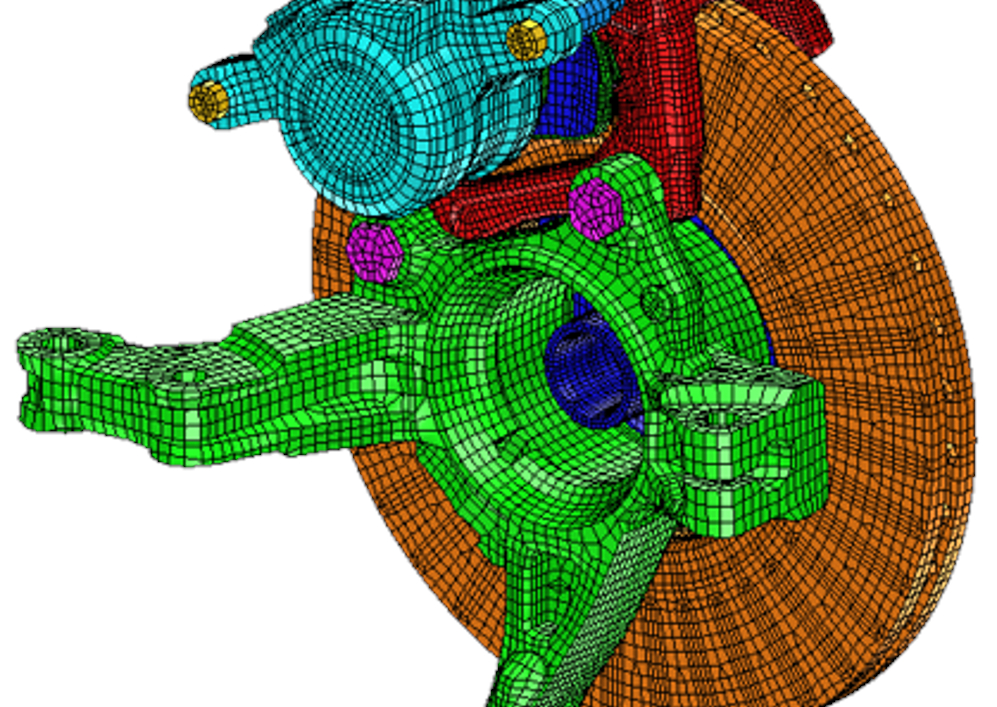
What You’ll learn
- Formulating stiffness matrix for simple geometries using the displacement method
- Types of engineering problems that can be solved with FEM and MSC Nastran
- Choosing the right element for the job: 1D, 2D and 3D element classifications, applications and limitations
- Model simplifications and meshing of simple 1D and 2D geometries to complex 3D geometries in MSC Apex
- Making the right assumptions when choosing boundary conditions and loads
- Setting up linear statics, normal modes and buckling type problems
- Developing 2D and 3D composite material models
- How to read and interpret results output such as element stresses, strain, displacement, contact status etc.
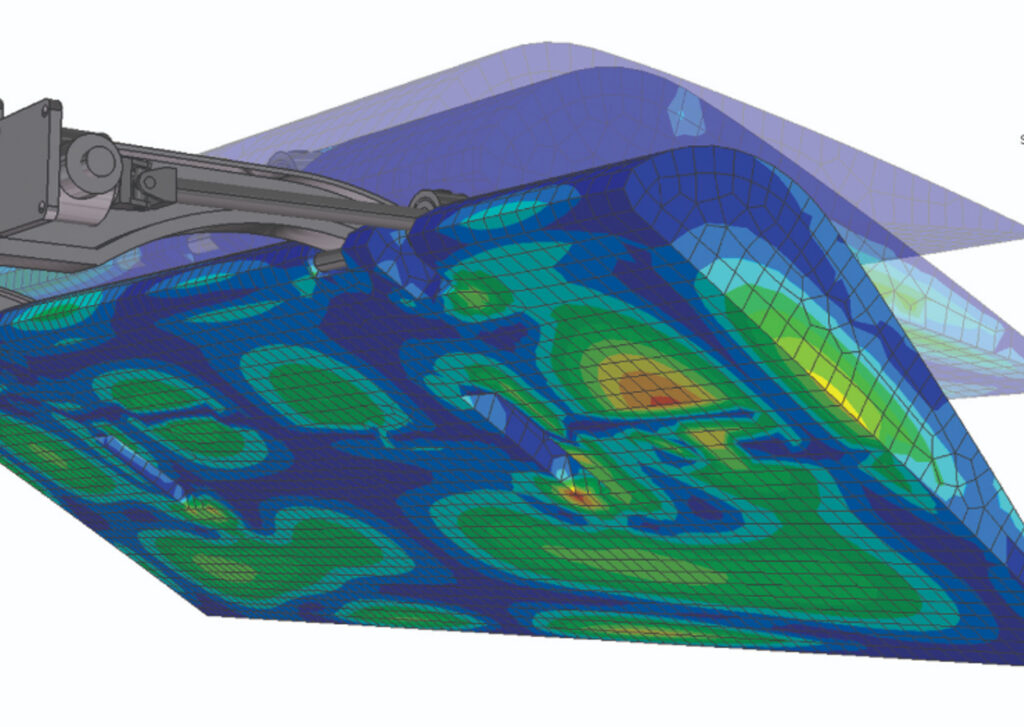
Target Audience
- Mechanical, aerospace, automotive, civil, and structural engineers
- CAE analysts and simulation engineers
- Engineers and students who are new to MSC Nastran and Finite Element Analysis
Prerequisites
Participants should have a basic college-level understanding of structural analysis and engineering
mechanics. No prior experience with MSC Nastran is required.
